
Every May, Mental Health Awareness Month encourages people to have more open conversations about emotional well-being, stress, anxiety, loneliness, and the importance of human connection. While mental health support looks different for everyone, one thing continues to stand out across both science and personal experience: music has the power to profoundly affect how we feel.
Research supports the idea that music has healing effects, showing that listening to music can positively influence mood, reduce stress, create emotional release, and strengthen feelings of connection. And within electronic dance music culture specifically, those benefits may become even more amplified through movement, shared experiences, and community.

Music affects far more than just our ears. It activates multiple regions of the brain tied to emotion, memory, movement, and reward. According to MN2S, when we listen to music, all four lobes of the brain become engaged. The auditory cortex processes tone and rhythm, while the amygdala helps trigger emotional responses and dopamine release, the same chemical associated with pleasure and reward.
That emotional response is part of why certain songs can instantly shift our mood or transport us back to a memory.
National Geographic also explored the neurological effects of music, citing research that showed participants experienced significant dopamine release after listening to their favorite songs. Using PET scans, researchers observed that the brain’s reward systems became highly active during meaningful musical experiences.
Additionally, Tebra has shown that 79% of people have used music to help them get through a dark time, with more than 1 in 10 people stating EDM is their go-to genre when feeling sad or depressed. With this, about 1 in 3 healthcare professionals think EDM is the best genre for improving mental health, with ongoing research showing benefits of enhanced mood, reduced stress, increased happiness, calmed anxiety, provided comfort, boosted energy, improved focus, reduced depression, and sleep assistance.
These findings help explain why music is so often used as a tool for coping, comfort, and emotional regulation.

While all genres can positively influence emotional well-being depending on preference, electronic dance music offers something uniquely immersive.
EDM is built around anticipation, emotional release, rhythm, and physical movement. The emotional payoff during a drop or musical climax creates an especially intense dopamine response. According to the MN2S report, dopamine release is strongest during “peak emotional moments” in songs, especially after long periods of build-up and anticipation.
That feeling is familiar to anyone who has ever experienced a perfectly timed drop during a sunrise set at sea or shared a euphoric moment with fellow GCFAM on a dancefloor.
But EDM culture goes beyond sound alone. It creates spaces for self-expression, movement, and human connection in ways that many attendees describe as transformative.
A recent study published in SAGE Journals explored the experiences of women over 40 participating in electronic dance music culture. Researchers found that EDM participation played a central role in supporting mental and physical health, while also providing social connectedness, self-expression, and a release from the pressures of everyday life.
If you’re ready to experience it for yourself, check out the Groove Cruise Miami 2027 lineup and discover the artists providing the soundtrack to those unforgettable moments at sea.

Groove Cruise was never intended to be just another party.
Created by Jason Beukema, Groove Cruise was built around the idea that music can bring people together in meaningful ways. It was about combating loneliness, anxiety, and disconnection through community and shared experience.
Groove Cruise has evolved into something many guests describe as life-changing, being a true festival at sea where music, connection, adventure, and emotional release all collide.
Our “floating music festival at sea” offers something many people don’t realize they’ve been missing until they step onboard. Moments of true connection happen while dancing during a sunrise set, meeting lifelong friends by the pool, feeling fully present during a favorite artist’s set, and sharing stories with strangers who quickly become GCFam.
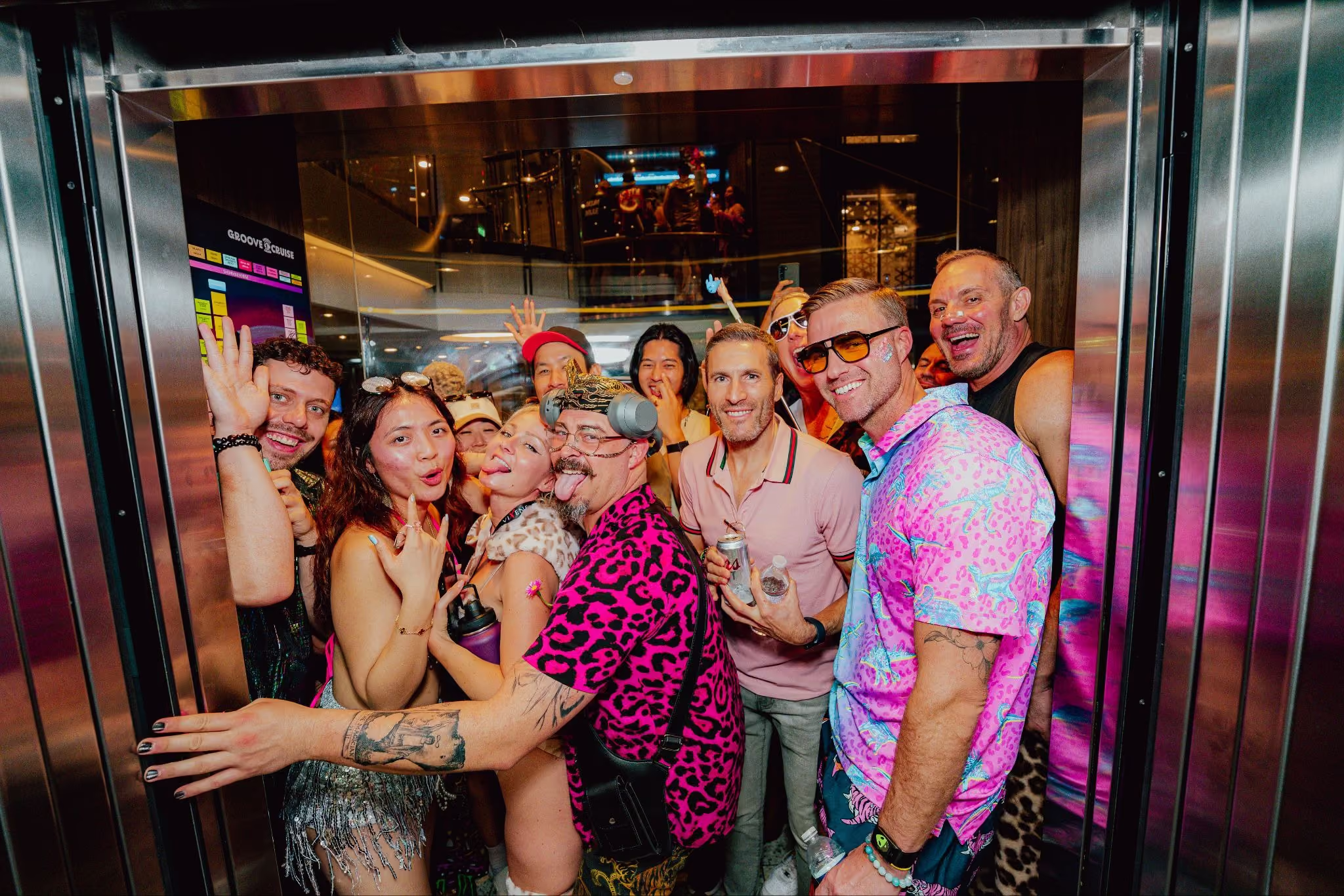
One of the biggest contributors to emotional well-being is human connection. Research consistently shows that loneliness and disconnection can negatively impact mental health, while shared experiences and supportive communities can improve emotional resilience.
That’s why experiences like Groove Cruise and the long-term impact of the Groove Effect continue to resonate with people far beyond the music itself.
For years, Jason witnessed something profound happening through music and community at Groove Cruise. People arrived carrying stress, fear, burnout, grief, insecurity, or emotional isolation and over the course of the experience, something shifted.
Walls came down, strangers became family, and people danced more freely, expressed themselves more honestly, and reconnected with parts of themselves they had forgotten.
But Jason realized that the transformation people experienced shouldn’t disappear the moment they returned home. This is the foundation for The Groove Effect.
The Groove Effect is the energetic shift that happens when someone fully shows up for themselves, for others, and for the moment. It’s the feeling of being “in the groove,” where mind, body, heart, and energy move in sync.
It starts with a small ripple: a moment of curiosity, courage, kindness, vulnerability, or connection. Then it spreads.
One person opens up, another feels safe to do the same, and suddenly a collective wave of healing, authenticity, and belonging begins to form.
Through the 8 Waves of the Groove Effect, participants are guided through experiences centered around self-awareness, courage, purpose, connection, and impact, helping them carry these transformations into everyday life, long after the music ends.
While music alone is not a substitute for mental health care, research increasingly shows that music, movement, social connection, and emotional release can positively contribute to overall well-being.
That’s why experiences like Groove Cruise centered around community and music can feel so powerful.
Whether someone comes aboard searching for adventure, healing, friendship, or simply a break from everyday life, Groove Cruise creates space for all of it.
And maybe that’s why so many people return year after year, not just for the artists or set at sea, but for how the experience makes them feel.
Groove Cruise is more than just a music festival, it’s a fully immersive community experience at sea. While many events focus only on lineups and performances, Groove Cruise combines music, connection, wellness, adventure, and shared experiences into one unforgettable journey. Guests often describe it as a transformational experience, creating what the community calls the “Groove Effect .” See the full 2027 itinerary here and come back closer to the sailing to check out the full Groove Cruise Miami 2027 schedule!
Groove Cruise recognizes the importance of emotional well-being and human connection. In partnership with When The Music Stops, Groove Cruise offers mental health-focused programming onboard designed to create safe spaces for conversation, reflection, and support. While not a substitute for professional care, these experiences encourage mindfulness, connection, and emotional awareness within the community.
Guests can participate in a variety of wellness and mindfulness experiences throughout the sailing, including artist-led mental health panels, meditation sessions, yoga classes, sound healing experiences, mindfulness workshops, and community conversations focused on connection and emotional well-being. Learn more about mental health programming on Groove Cruise Miami here.
For many attendees, Groove Cruise creates a rare sense of belonging and connection. Sharing music, movement, and meaningful experiences with like-minded people often leads to deep friendships, emotional breakthroughs, and lasting memories. Many guests return year after year because of the supportive community they discover onboard.
The Groove Effect is the lasting feeling of connection, joy, and transformation that many guests experience during and after Groove Cruise. It’s the friendships formed on the dancefloor, the emotional release through music, and the sense of belonging that continues long after returning home.
Yes – our 2027 sailing sold out 11 months in advance. You can sign up for our 2027 priority paid waitlist here and our 2027 general waitlist here, plus view Groove Cruise 2027 pricing here.
Sign up HERE for the latest Groove Cruise news, exclusive discounts, merch promos, and to be notified when a new cruise is launched!

.webp)
.webp)
.webp)
.webp)

